Showing posts with label writing. Show all posts

Wednesday, April 26, 2017

The Shoes of the Fisherman - Morris West

2017 Reading Calendar - March

When Morris West died at his desk, mid-sentence, on 9 October 1999, he had sold an estimated 60-70 million copies of his novels. His death was reported in London and New York, as well as across Australia. The 7.30 Report paid tribute, sharing excerpts of an interview with Geraldine Doogue in which he talked about life, love, death and the Catholic Church.

The Church seems to have been something of an obsession. He almost, almost took vows as a Christian Brother. Instead, he went on to create what Kerry O'Brien described as 'the so-called Vatican novel', publishing novels that explored morality, belief, religious power.

The Shoes of the Fisherman is one of these. Published in 1963, on the day Pope John X111 died, it is the story of the election of the first Russian Pope.
'The Pope was dead. The Camerlengo had announced it. The Master of Ceremonies, the notaries, the doctors had consigned him under signature into eternity.'
I read this book years ago. Intrigued by the pomp and mystery (for a non-Catholic) of the Catholic Church. Curious about this Australian writer who was read all over the world and doted on by my mother. As we packed up Mum's house to move her into full-time care, her copy of The Shoes of the Fisherman ended up in a box in my living room.

Returning to it was a struggle. My mind couldn't make sense of all cardinals. I lost track of the plot lines - there's the new Pope, at least two retiring cardinals, a priest returning from the spiritual wilderness, a journalist wrestling with an all-consuming love, a woman adrift in Rome. Sometimes I lost my way in the complexity of the sentences. I began to worry I was spending too much time on Twitter, that I was losing my ability to read anything more complex than 140 characters.

Struggle, though, is what I have come to think the novel is about. The struggle to find our way in the world, to live the life that we have chosen or which has been chosen for us. Kiril, the newly appointed Pope, wrestles with his role as the leader of the Church. George Faber, the journalist who has made his career reporting on the Church in Rome, has reached his own crossroads: how much of his soul is he willing to sell to secure marriage to the young Chiara, the deserted wife of a Catholic politician?

The Shoes of the Fisherman is also extraordinarily contemporary, even if sometimes its language feels outdated. Like so many of the book's characters, the world is at a crossroads too. A disaster is pending, unless Russia and America can find a way to work together. Environmental disasters loom. The Catholic Church is losing its eminence in many parts of the world. Kiril wrestles with how to change the Church while honouring its origins.

Morris West left Australia in the late 1950s, not returning until 1980. It is hard to find a sense of Australia in this novel. It is an international book, embracing the wider world without more than a backward glance to the country West had left. The references are brief. There is 'Hanna the Irishman from Australia', joining the other cardinals in the Conclave that will anoint Kiril. And 'A plague in the Philippines can infect Australia within a day'. But that's about it. Yet it's not as though West was completely disinterested in his home country. He returned to live in Sydney, chairing the Council of the National Library of Australia and the National Book Council. He was appointed a Member of the Order of Australia in the Australia Day Honours of 1985 and upgraded to Officer of the Order in the Queen's Birthday Honours of 1997.

Today, Morris West's 101st birthday, he is little read and you will probably only find copies of his 30 books tucked on the dusty shelves of secondhand bookshops. Perhaps it's time for those books to be dusted off and read again.

Want more?

  • Listen to Morris West via the National Library of Australia. There are two interviews available online - one recorded by Hazel de Berg in 1960; the other recorded by Diana Ritch in 1992.
  • Read the New York Times obituary.
  • You might also track down the biography, Morris West: Literary Maverick by Maryanne Confoy, published by John Wiley in 2005.

Sunday, March 12, 2017

Paris Dreaming - Anita Heiss

2017 Reading Calendar - February


Anita Heiss' novel about a young woman's journey of self-discovery is part of my own 'Paris dreaming'. Published in 2011, I read it before I was able to spend 8 weeks in Paris in 2012, before the Charlie Hebdo attacks in 2015. Rereading it now, I'm reminded that it was one of my first 'guide books' to the city. It also has an innocence and an awareness of the traumas to come.

Ostensibly contemporary women's fiction, or 'choc lit' as Heiss herself has described it, Paris Dreaming is, like all of Heiss' work that I've read, politically aware. On the surface, this is a novel about discovering your self and your true love in one of the most romantic cities in the world. Libby Cutmore is over men and focusing on her career. She may not be interested enough in fashion or food to keep her friends happy, but she is ambitious and determined to make a contribution to the promotion of Indigenous art on an international scale. I think she has a lot in common with Carrie Bradshaw - no matter how much she protests she doesn't need a man, you know she just hasn't met her 'Big' yet. And you know by the end of the novel that she will.

That, though, is just what's happening on the surface. Rereading Paris Dreaming, I was reminded of four things:

  • how much I learned about Paris and, especially, the Musee de Quai Branly and Australia's involvement in it;
  • the political environment - in Australia but also in France. Libby's friendship with the young Roma seamstress, Sorina, provides an early insight into the impact of the recent mass influx of refugees in Europe. The novel also references the riots on Paris' council estates in 2005-06, as well as the Cronulla riots that occurred at the same time;
  • what it's like to read about your own city (Canberra) in fiction. Heiss isn't always complimentary - how many cities compare well to Paris? - but there is something special about reading about your own place; and
  • how much I learned about Indigenous Australia, it's art, culture, and politics.
This, I suspect, is really the point of Heiss' writing and it's something she has spoken about. At the 2014 Australian and New Zealand Festival of Literature and Arts, she is reported by Philippa Moore as saying:
“I wanted to connect with Australian women to talk about Aboriginal art, culture, politics, social justice and issues that I am passionate about, and issues that I think all Australians should be engaging with ... But I had to think about ways to engage women who may never have had a cuppa or yarn with an Aboriginal woman before, who may have seen us marching about Black Deaths in Custody or the NT intervention but never understood why. Or worse still, had never thought about us at all.”
This is something I think Heiss does extremely well in her fiction. Whether it's the 'choc lit' Paris Dreaming and it's forerunner, Manhattan Dreaming, or her more recent novels, Tiddas and Barbed Wire and Cherry Blossoms, Heiss helps me to better understand the lives and the issues faced by Indigenous Australians in a way that is very accessible.

You can read Paris Dreaming for the city and the romance and it will reward you. But if you read it just a little more closely, you will finish the book with an enhanced understanding of what it means to be an Indigenous Australian.

Want more?

  • Anita Heiss' website has lots of interesting reads and links
  • Whispering Gums' review of Paris Dreaming
  • 'From chick lit to choc lit' - Philippa Moore's article on Anita Heiss at the 2014 Australian and New Zealand Festival of Literature and Arts


Sunday, January 29, 2017

The Boy Behind the Curtain - Tim Winton

2017 Reading Calendar - January

Late in the day we step out into the withering heat. Most of the sting has gone from the sun but the air is still so hot it's like trying to inhale a fluffy towel fresh from the tumble dryer.
From 'High Tide', The Boy Behind the Curtain


Twenty-two years ago, I stopped reading Tim Winton. There was something about the ending of The Riders that so infuriated me, I swore I would never read him again. Of course, now I can't tell you exactly what it was that made me so mad. And my (gradually dissipating) fury didn't stop me reading his non-fiction when it appeared in newspapers and The Monthly. But it did stop me reading his novels and the highly praised Island Home.

Last October, I decided it was time for a change of heart and it was Winton himself who won me over. At an event at the National Library to promote his non-fiction collection, The Boy Behind the Curtain, he enthralled me with his storytelling and his fearlessness. You can listen to the event online. I bought the book and it sat in my to-be-read pile until now.

When I chose it for the Reading Calendar, I assumed it would be a great read for summer, full of Winton's renowned love for the ocean. And it is. 'High Tide' and 'The Wait and the Flow' take you to the beach and into the sea. But the book reveals more than just the experience of being in and on the water. Many of the essays explore Winton's love of the 'litoral', For Winton, the spaces on the edge - of the sea, of the desert, of civilisation, of society - are the spaces that engage his imagination and they are often the subject of his non-fiction.

The essays in the book are presented chronologically, so we begin with the boy Winton quite literally hiding behind the 'terylene curtain', taking aim with his father's shotgun at people passing by, We watch him grow up, going to university, parenting and grandparenting. He writes about hospitals, class, the environment, Ireland, 2001: A Space Odyssey, art and refugees, about sharks and whales and Ningaloo Reef. Occasionally, he writes about writing, of being taught by Elizabeth Jolley, of the urgent need to 'light out' once a book is finished.

Winton's knowledge of Australian flora and fauna amazes and shames me. In 'Repatriation', I travel alongside him to Lake Moore but am almost left behind by his knowledge of marsupials. Bilbies I know, but boobies, woylies, 'the elusive wambenger, the chuditch ... and several species of dunnarts' have me running to Wikipedia. He calls me back as
A mob of Major Mitchell's cockatoos spills, untidy as a closing-time crowd, from a desert cypress.
I know I will never see cockatoos in any other way again.

Winton surprises me most, though, when he writes about religion, the way it shaped his childhood and continues to inform his life. I'm struck by how little I read about religious belief and I wonder if this reflects my reading choices or whether we hesitate to reveal our spiritual selves in this secular world.

'Twice on Sundays' reveals Winton's childhood as part of the Church of Christ. My grandfather, who died 10 years before I was born, was a Church of Christ minister. By the time I was attending Sunday School, though, the Church of Christ had faded and my mother chose the Methodist Church as the next best thing. I grew up knowing a little about  my grandfather's faith, that full-immersion baptism marked the Church of Christ as different. But if pressed, I wouldn't describe it as 'a counterculture', as Winton does. I still find it hard to reconcile the family picture of my grandfather with the 'militantly religious' upbringing Winton experienced. And yet ... perhaps I can.

The Boy Behind the Curtain is best read slowly, savouring the language, pondering the ideas. Inevitably, as many of the essays have been published previously, there is a sense of familiarity, occasionally of repetition as an incident is revisited in part or from a different angle. And occasionally, Winton sermonises, perhaps not surprising given his upbringing but often disconcerting, breaking the rhythm of his storytelling.

If you have never read any Winton, The Boy Behind the Curtain is a great place to begin. And if, like me, you are seeking reconciliation, it is joyful, heartrending,and often thought-provoking.

The Boy Behind the Curtain by Tim Winton, published by Penguin Random House Australia, 2016


Sunday, November 6, 2016

Five Australian Illustrators

I've been thinking about illustrators of children's books. I blame my work. One of the perks of my job at the National Library of Australia is that I have an opportunity to meet and listen to the greats of Australian writing, publishing and research. Recently, it was illustrator Robert Ingpen AM who, in 1986, received the Hans Christian Anderson Award for Illustration for his 'lasting contribution to children's literature'.

Over the past decade, Robert's work has focused on creating new illustrations for a collection of Children's Classics, published by Palazzo Editions. He has created new images for Alice in Wonderland, Peter Pan, The Wind in the Willows, A Christmas Carol, The Jungle Book, and The Secret Garden. The National Library has published a new book, Wonderlands: The Illustration Art of Robert Ingpen, which celebrates this work. During the conversation, though, Robert was asked why new illustrations were needed. Surely, the questioner asked, if new words weren't needed, the original images would be fine too?

It's Robert's reply that has kept me thinking. In a world full of colour, where children live on screens, the old line drawings of earlier days don't cut the mustard (I'm paraphrasing). And perhaps more importantly, he described his job as finding spaces in his illustrations for children's imaginations to occupy. Isn't that perfect? He isn't looking to supply the imaginative world of the book so much as to inspire the imaginative worlds of young readers.

This idea of illustrators creating doorways into the imagination has kept me thinking. I've been thinking about the illustrators whose work I love to look at and whose work I love reading aloud. So I thought I'd share with you five books b y Australian illustrators who have inspired reading and imagination in my house.

Jeannie Baker

Jeannie Baker's Belonging, published in 2004, is a book without words. It tells the story of an inner city suburb, transformed by it's community from an industrial wasteland into a vibrant environment. And it tells the story of a little girl who grows into adulthood in this urban space. Lacking words, the readers are free to follow whatever storytelling path they choose. Sometimes we followed the girl's story. Others, we looked at the changes happening outside the window that frames each illustration. And the illustrations are something to behold, each an elaborate, detailed collage. They provide another way to engage with the book, working out what materials were used to create the hammock, the pond or the paving stones.

Graeme Base

Another illustrator who creates wonderfully intricate images is Graeme Base. This image is from his counting book, The Waterhole (published 2001). More than a counting book, The Waterhole is a book about animals, environment and climate. Like Belonging, there is more going on here than the words on the page suggest. Graeme Base's books are like that. As an author-illustrator, he has created puzzle books that have defied my puzzle-solving abilities. But even when I can't solve the puzzle, I love the illustrations. My photograph doesn't do justice to his work but it gives you a hint of Graeme's sense of humour. Can you spot the anthropomorphised frogs in a work that is otherwise highly accurate? Those frogs travel around the world with you. Maybe they are you?

Freya Blackwood

Here's a fun fact - Freya Blackwood worked on special effects for The Lord of the Rings trilogy! Her illustrations are a long way, though, from the world of the Hobbits. They are gorgeous evocations of childhood, sometimes in what looks like watercolours, sometimes pastels. Freya Blackwood has created the images for some of our best writers of children's books, including Margaret Wild and Jan Ormerod, but she seems to have formed a beautiful partnership with Libby Gleeson. This illustration is from Amy and Louis (published in 2006), a beautiful story about friendship and losing a friend. It tackles a very common experience - what happens when your best friend moves away - but I think it is also a perfect book for starting to talk to a small person about death. Freya has also illustrated Libby's Clancy and Millie and the Very Fine House, which will make you want to build a box city.

Nick Bland

How I love Nick Bland's The Wrong Book (2009). I love Nicholas Ickle who desperately wants to tell us a story but whose storytelling is constantly interrupted by a parade of characters that young readers may recognise from other books. There's a dinosaur, a queen, a marionette puppet who looks remarkably like Pinocchio, and rats ... lots of rats. Bland is an author/illustrator who lives in Darwin but his books don't (yet) reflect that part of the world. He's perhaps most loved for The Very Cranky Bear, a character who seems to have taken on a life of his own and who now appears in a number of Bland's books. But Nicholas Ickle is my favourite. Who can resist that little face, his frustration, his dejection? It's a wonderful book to read aloud - especially as young listeners will try to beat you to the punchline.

Judy Horacek

If I'd been planning my blogs, I might have only talked about illustrators whose last names began with 'B', saving the letter 'H' for a later post. But I chose on the basis of love and Judy Horacek's classic, with text by Mem Fox, is dear to my heart. Where is the Green Sheep? was published in the same year my boy was born and we began reading it almost immediately. The story goes that Mem was inspired by Judy's drawing of a sheep. Until that time, Judy was known as a cartoonist. Where is the Green Sheep? has lead to a new career in children's books, as an author and as an illustrator, and as a collaborator with Mem Fox. This is my favourite image from Where is the Green Sheep? It reminds me of Singin' in the Rain, a movie that is also very dear to me. And that's the beauty of this book: as carefully chosen as the words are, Judy's illustrations give you so much to explore and share with your little one. There's a reason why it is much-loved and in print 12 years after publication.


Thursday, September 29, 2016

Hal Porter: A writer I haven't read


The Tilted Cross by Hal Porter
Faber & Faber, London, 1961
Recently, I was given a copy of Hal Porter's Tasmanian novel, The Tilted Cross. Published in London in 1961 by Faber and Faber, the novel is set in Van Diemen's Land and is loosely based on the life of Thomas Griffiths Waineright, an artist, author and journalist, possibly a serial killer and 'multiple poisoner'. Surprisingly, given this colourful story, he was transported for forgery.

It wasn't Waineright who intrigued me, however (the Australian Dictionary of Biography provides a balanced overview of his life if you'd like to know more). It was the novel's author - Hal Porter.

Porter's memoir, The Watcher on the Cast-Iron Balcony, was published in 1963. One of the first Australian memoirs, it is widely regarded as a classic and today it's the book for which he is best remembered. Now out of print and not a novel, it still managed to find its way onto Booktopia's 2010 list of 'The 50 Must Read Australian Novels'.

As an adult, Porter lived a peripatetic life. The ADB entry reveals he moved from Bairnsdale to Melbourne, Adelaide, Hobart, Sydney, taking up short-lived teaching positions, tutoring, producing plays, running a hotel. In 1949 he joined the Army Education Unit and was posted to Japan twice. London beckoned in the early 1960s but he returned to Australia, spending the remainder of his life alternating between Melbourne and rural Victoria. Homosexual, his biographer Mary Lord revealed in 1993 he was also a paedophile. Was all this movement driven by the need to keep ahead of the law, of unhappy parents and school principals?

The one constant in his life seems to have been his writing. In an oral history interview recorded for the National Library of Australia in March 1964, Porter describes himself as a 'born writer', although one afflicted with a terrible disease.

Porter published Short Stories in 1942 and, according to the blurb on The Tilted Cross, 'won all the major short-story competitions in Australia'. A meeting with Angus and Robertson's editor Beatrice Davis in Sydney lead to the publication of poetry, novels and a trilogy of memoirs. Apparently a bit of a snob, he must have been over the moon to have been published in London by Faber and Faber, joining the likes of TS Eliot, Beckett, Harold Pinter and Ted Hughes.

The Tilted Cross received mixed reviews. In The Canberra Times review published on 9 December 1961, 'FX' wrote:
He spins his words like a thick spider's web and in the depths of the web he set an evil collection of characters - the impotent knight, his adulterous wife, the nymphomaniacal spastic, sadists, drunkards, homosexuals ... The book was written under a Commonwealth Literary Fund Scholarship. In spite of Mr Porter's previous achievements and record, I feel the money might have been better spent.
The full review is available via Trove.

Porter recognised that his writing wasn't liked by everyone, that some reviewers thought he was verbose, baroque and overblown. The opening paragraph of The Tilted Cross provides an example of why they might have thought that:
Van Dieman's Land, an ugly trinket suspended at the world's discredited rump, was freezing. From horizon to horizon stretched a tarpaulin of congealed vapour so tense that it had now and then split, and had rattled down a vicious litter of sleet like minced glass, that year, that winter, that day.
In his oral history interview, Porter claimed his large vocabulary was due to a childhood addiction to books and dictionaries.

Porter died in September 1984. A brief obituary in The Age noted that he once said that 'posterity would see him as a passable novelist, a fair playwright but a pretty good short story writer'. He was 73.
This post was written as part of the 2016 Sydney Story Factory Pen to Paper Challenge. I'm inspired by the work of Sydney Story Factory. I'd like to help them grow so that, one day, Martian Embassies will be all over this country. So during September I'm putting pen to paper - and hopefully rebooting my blog. If you enjoyed this post, please give whatever you can. Let's help the Sydney Story Factory grow.

Monday, September 19, 2016

Not Writing

I can't write. 

It's 6am and I've turned the computer on to write the blog post I've been mulling over for a week. But the internet connection is defeating me. The computer gives up before a page is fully loaded. I reboot the modem. Wait. Sip the mug of hot water that is part of my morning routine. Try again. Nothing. There's a message on the screen that assures me it's trying, that it will keep trying. Before it gives up.

The Hate Race by Maxine Beneba Clark -
a book that made me think about the thread
of racism that runs deeply in our society.
The idea for the post began simply enough. I wanted to review two recent reads. The Hate Race by Maxine Beneba Clark and Barbed Wire and Cherry Blossoms by Anita Heiss. One a memoir set in Kellyville on the edge of Sydney in the 1980s. The other a cross-cultural romance set in Cowra in 1944. Seemingly they have nothing in common. And yet both books allowed me to stand in someone else's shoes - young Maxine, who's Afro-Caribbean heritage made her a target in the school yard and 17-year-old Mary, living a life controlled by the Aborigines Protection Act during the war. Both books reveal what it's like to be black in Australia. And both books allowed me to learn what Australian racism looks like. I wanted to explain how they showed me how deeply ingrained racism is in our country. Most of us say we aren't racist. We love Chinese and Vietnamese food. We buy sushi for lunch and tickets to Bangarra Dance Theatre. But both books made me wonder about my very white upbringing, about whether I too am complicit.
One of the beautifully coloured
homes of Georgetown.

I am not writing. I thought participating in the Sydney Story Factory's Pen to Paper Challenge would be a wonderful reboot. Instead, I'm struggling. I'm avoiding. Yesterday, I helped the 11-year-old clean his room. I was thinking about the blog post, though. Thinking I'd write it in the evening. I'd turn it into a travel post on Georgetown in the US instead. I selected photos, researched the history of Georgetown on my phone. In the evening, with everyone else tucked in bed, I read Good Weekend. Sam Dastyari's problems and the role Scientology played in the end of Tom and Nicole's marriage were so much more compelling.

But my thinking was overwhelmed by my Twitter feed. All week, I scrolled through articles and comments about Lionel Shriver's speech about cultural appropriation, given at the Brisbane Writers Festival. I watched Twitter as Yassmin Abdel-Magied walked out. I read her impassioned explanation, Lionel's speech, Marlon James' Facebook post, Caroline Overington's comments, and Maxine Beneba Clark's report of meeting Lionel Shriver. And in the midst of it all, Pauline Hanson gave her second maiden speech in the Australian Parliament, replacing her 'swarm of Asians' with her 'swarm of Muslims'. 

Where, I wondered, did my simple review fit in all of this? Did I have anything new to add? Annabel Crabb in the Sydney Morning Herald and Nesrine Malik in The Guardian seemed to say it so much better.

Now, this morning, I'm here to face the screen. Willing. Committed. But the internet won't oblige. It's recalcitrant. It won't cooperate. It's a blank screen that will not load. I'm not putting fingers to the keyboard this morning.

If I want to write, I have to revert to first principals. I have to put pen to paper, follow the advice of the Sydney Story Factory to the letter. This isn't a keyboard challenge. It's pen to paper. I have to face the page, not the screen. Pick up the pen, hold it in my hand.

The pen bulges where my fingers grip it and my grip is tight. I dig words into the page. My hand can't keep up with the words. My hand tires in a way my fingers never tire on the keyboard. No matter how I twist the pen, how I adjust my grip, sooner or later the metal clip digs into the soft skin at the base of my index finger. It's uncomfortable. Awkward. But I'm holding on tight. Not giving up yet. Still writing.


This post was written as part of the 2016 Sydney Story Factory Pen to Paper Challenge. I'm inspired by the work of Sydney Story Factory. I'd like to help them grow so that, one day, Martian Embassies will be all over this country. So during September I'm putting pen to paper - and hopefully rebooting my blog. If you enjoyed this post, please give whatever you can. Let's help the Sydney Story Factory grow.


Wednesday, December 17, 2014

Bookish Gifts for the Difficult to Buy For

I love a good 'best of' list and we've reached that time of year when it seems everyone (whoever she is) is sharing her favourites for 2014. I've been trying but I can't narrow it down to a manageable number - five becomes six becomes sixteen and 'best' becomes a nonsense.

So instead of a neverending story, here's a list of books you might buy for the difficult to buy for, drawn from my reading this year. It's not too late to pop into your local bookshop.


The world traveller you wish would come home
We all have one – the family member who makes their way somewhere else in the world and you wish you could tempt them home. Send them Nigel Featherstone’s novella, The Beach Volcano. It will remind your traveller of hot coastal nights, wintery Tasmanian days, and the powerful ties of family that never ever let go. It’s a slim volume, which means it will be cheaper to post than the latest volume of Thomas Keneally’s Australians series.

The family historian
 I will love Lloyd Jones forever for writing Mr Pip, a gutwrenching ode to the power of literature in the most unlikely place but his recent memoir, A History of Silence. A story of Christchurch as it struggles to heal after the earthquakes, it is also the story of writing across the silences in a family’s history to reveal the heartbreak at its core. It’s sad but exquisite – and anyone interested in family history will love sharing the research process with Lloyd Jones.

The new arrival
It's baby's first Christmas and baby already has everything: stuffed toys, rattles he can't hold, more clothes than anyone could possibly wear. The answer? Australia's children's classic, Where is the Green Sheep? by Mem Fox and Judy Horacek. It only has just over 100 words but it will last for years. It will be one of the first books read to baby, read with baby and read by baby. And one day, it will be the first book baby will read to another new baby.

The 'creative'
I struggle with 'creative' being used as a noun but I'm ignoring that because 'entrepreneur' or 'thought leader' seemed even worse. This is the person in your life who wants to make a living out of their passion, and who may or may not work in the arts or hospitality or museums or online or in design (fashion, graphic) or who writes or draws or makes music or theatre around the edges of their day job. Encourage them to follow the dream and have an inspired, glossy 2015 with a subscription to Renegade Collective.

The struggling reader
You know that if she could just make it to the end of the book, she would fall in love with reading for the rest of her life. But books have so many words, she's terrified. Give her The 13 Storey Treehouse by Andy Griffiths and Terry Denton, a book (and sequels) where words and pictures combine to reveal the powerful effects of imagination on the lives to Andy and Terry, who don't have very long to finish writing and drawing their next book.

The sister or bff
Anita Heiss' Tiddas is my pick in this category this year - and I've already gifted it to one of my sisters. It offers best friends, book talk, secrets, messy lives and one of the most engaging depictions of Brisbane I've ever read. Made me want to hop on the plane with Tiddas as my guidebook. Perfect for book clubs too, it challenges how Indigenous Australians are depicted in much of our fiction.

The political junkie
You don't agree with their politics. You don't know what political memoirs they have recently read. And sometimes they take their politics so damn seriously. Lighten them up with Behind the Lines; The Best Political Cartoons of 2014, published by the National Museum of Australia.

The lover of tales
Kate Forsyth writes across genres but until this year I hadn’t read any of her work. Then I read Bitter Greens, her reimagining of Rapunzel, and followed it quickly with The Wild Girl, a novel based on the story of Dortchen Wild who lived next door to the Brothers Grimm and was the teller of many of the tales they made famous. Set during the Napoleonic Wars, its romantic and passionate and heartbreaking – and it puts a wonderful woman back into the picture.

The Rebus fan
He says he loves crime but only ever talks about Rebus. Introduce him to Cormoran Strike, a wounded war veteran and his sidekick Robin (couldn't help myself). Strke is the creation of JK Rowling's alter ego, Robert Galbraith, and in his first outing, The Cuckoo's Calling, I fell hard. He's a tortured soul (not unlike Rebus), the streets of London leap off the page, the crime is intriguing, and Robin holds Strike and the book together. The second book in the series, The Silkworm, is on my summer reading list.


The dreamer
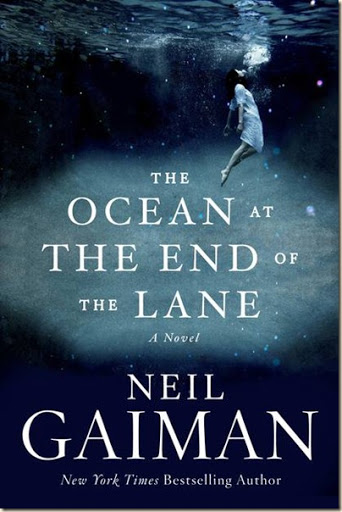
Neil Gaiman’s The Ocean at the End of the Lane is a dream of a book for the dreamer in all of us. A contemporary fairytale, it’s a story about a young reader for readers everywhere. As the narrator says: ''I liked myths. They weren't adults' stories and they weren't children's stories. They were better than that. They just were.'' Buy a copy for your dreamer and one for yourself as well.