Showing posts with label reading. Show all posts

Saturday, January 6, 2018

(Thirty) Six Degrees of Separation

It's 36 degrees Celsius in Canberra at the moment. Rather than standing in front of the open freezer door, I'm thinking about different degrees ... of separation. I'm sure you know that Annabel Smith and Emma Chapman began the 6 Degrees of Separation meme in 2014 and now it is managed (is that the right word?) by Kate at Books are my favourite and best. The idea is that Kate nominates a book and, on the first Saturday of the month, participants reveal chains of six books that all connect in some way. If you are curious to see where other people's reading leads them, Kate's blog is a good place to begin. But I owe my introduction to Whispering Gums, another very good place to start.

The year begins with Alexander McCall Smith's The No 1 Ladies Detective Agency. Now, I haven't read any of the books in this series, despite the fame and love showered on its heroine, Precious Ramotswe (could she have a more delightful name?). But over 10 years ago, a dear friend gave me the first two books in what is now called the Isabel Dalhousie series, The Sunday Philosophy Club and Friends, Lovers, Chocolate. Set in Edinburgh, Isabel is an independently wealthy philosopher, the editor of a small magazine, who solves problems for friends and strangers. I'm delighted to see the 12th in the series will be published this year. I'm still reading along.

Next up could be a series (Harry Potter is too obvious, right?), a female detective (perhaps Aimee Leduc?), or a book set in Edinburgh (Ian Rankin?). But thinking about philosophy reminds me of Sophie's World: A novel about the history of philosophy. Written by Jostein Gaarder, this was a publishing phenomenon in 2007. I bought it hoping it would provide me with a quick guide to Philosophy. Perhaps I read it too quickly - none of it has stuck.

Jostein Gaarder is Norwegian and, as I'm starting to melt sitting here at the computer, I think we need to be somewhere cold for a few moments. Jo Nesbo is Gaarder's compatriot but his crime novels featuring Harry Hole (another detective, another series) have become a different kind of publishing phenomenon. The first in the Harry Hole series, The Snowman, is the only one I have read - although there is another on my TBR pile. I think I could become quite fond of Harry.

Let's keep with the 'snow' theme. Do you remember reading Snow Falling on Cedars by David Guterson? I can't quite believe it was published in 1994! I'd forgotten that it, too, is a murder mystery but I have a very strong memory of its depiction of anti-Japanese sentiments on the west coast of the United States in the 1950s. Much of the story is told in flashback and, if my memory serves me correctly, the novel also depicts Japanese Americans being interned during the war.

Internment takes me to my next book - I'm thinking of Always Afternoon (1981), a novel by Gwen Kelly, set in Australia during World War 1. Internment stories intrigue me. My grandfather was a chaplain at the Hay Internment Camp during World War 2. A beautiful television adaptation of the novel lead me to the book, which tells the story of German internees living in Trial Bay, NSW, during the war. Kelly published five novels, many short stories, and was awarded four Henry Lawson prose awards. You can read a little bit about her here.

I'm a bit stuck for where to end, partly because I'm thinking about the book I have been reading this afternoon, George Saunder's Lincoln in the Bardo. Maybe it's a bit of a cheat, but being interned is a little like being stuck in the 'bardo', that no-man's land between life and death. And both books are set during ugly, horrific wars. I'm so close to the end of the Lincoln in the Bardo, that there's only one thing left to do: go and finish it, while standing in front of the open freezer.

Wishing you many great and cool reads in 2018.


Saturday, November 4, 2017

Six Degrees of Separation - Following Bret Easton Ellis

Would you pick this up in a bookstore?
Oh dear! I've never read any of Bret Easton Ellis' novels. He was the enfant terrible of young writers in the 1980s. I have a memory of American Psycho appearing on bookshelves sealed in plastic. His first novel, Less than Zero, is the subject of Six Degrees of Separation this month.

While I agonise about where Less than Zero will lead me, regular readers will know that Annabel Smith and Emma Chapman began the 6 Degrees of Separation meme in 2014 and now it is managed (is that the right word?) by Kate at Books are my favourite and best. The idea is that Kate nominates a book and, on the first Saturday of the month, participants reveal chains of six books that all connect in some way. If you are curious to see where other people's reading leads them, Kate's blog is a good place to begin. But I owe my introduction to Whispering Gums, another very good place to start - I also owe her for some mentoring on how to set up comments. Hopefully that's under control now.

But back to Less than Zero. The online blurbs suggest its reminiscent of Luke Davies' Candy - but I haven't read it either. The book I remember reading when Easton Ellis what at the height of his fame was Donna Tartt's The Secret History. The Paris Review, via Google, tells me that Tartt and Easton Ellis attended the same college and shared early drafts. Saved by Google.

The Secret History is set in a college and starts with a murder. I'm going to take the easy route and follow the crime. This time to Tana French, the Irish crime writer, I read In the Woods earlier in the year, looking for a new crime series to follow. She was getting a lot of press at the time, although her novels were quite hard to find in local bookstores. It was an enjoyable read but I didn't get the bug and haven't read any others yet.

I'm now in Ireland, though, and thinking about Irish fiction. Probably the first Irish novel I read was The Country Girls by Edna O'Brien. I read it a very long time ago. It was one of a number of books I read that helped me explore what being a feminist might mean.

Simone de Beauvoir is another writer I read around about the same time (surprise!). I discovered her via the marvellous biography by Deirdre Bair. I ended up reading all de Beauvoir's novels but the one that remains foremost in my mind is The Mandarins. Set in France in the aftermath of the Second World War, it is believed to be based on the group of intellectuals who surrounded de Beauvoir and Jean Paul Satre. The truth disguised as fiction, perhaps?

Now reading
Another novel based on life is Alex Miller's new book, The Passage of Love. I'm reading it at the moment (up to chapter 5) and, while it might be based on his early years in Australia, I've quickly stopped second-guessing and am becoming immersed in the story of Robert Crofts, who travelled from England at 17 to become a stockman in the far north before becoming a writer.

Another book about a writer is Stephen King's Misery. (I love the cover text I've linked too: 'Paul Sheldon used to write for a living. Now he's writing to stay alive'.) Funnily enough, Misery has some connections to Less than Zero. The first is that I haven't read either - although the film starring Kathy Bates and James Caan is forever etched in my memory. The second is that Stephen King is apparently one of Bret Easton Ellis' influences.

Now how's this for a coincidence: I've just looked at Books are my favourite and best to find out what December's book is ... Stephen King's It! I don't think I'm going to read it (I'm not good with horror and scary clowns) but I look forward to seeing where it leads me.


Sunday, October 8, 2017

Six Degrees of Separation - Like Water for Hot Chocolate

Last weekend, I was clearing out the shed where I store boxes of books acquired nearly 20 years ago. There were a few reading memories there, I can tell you. On the shelves, I found my copy of Like Water for Hot Chocolate by Laura Esquivel. I remember buying it on a lunchtime walk to Paperchain Bookstore in Manuka. In those days, a friend and I often spent our lunch hours walking to the bookshop, browsing the shelves, and inevitably carrying something new back to the office. Like Water for Hot Chocolate is this month's choice for 6 Degrees of Separation. 

You might already know that Annabel Smith and Emma Chapman began the 6 Degrees of Separation meme in 2014 and now it is managed (is that the right word?) by Kate at Books are my favourite and best. The idea is that Kate nominates a book and, on the first Saturday of the month, participants reveal chains of six books that all connect in some way. If you are curious to see where other people's reading leads them, Kate's blog is a good place to begin. But I owe my introduction to Whispering Gums, another very good place to start.

So where will Like Water for Hot Chocolate lead? There are a few paths we could take to begin - Chocolat by Joanne Harris; perhaps to Isabel Allende who I also discovered at Paperchain. But as Like Water for Hot Chocolate is 'a novel in monthly instalments with Recipes, Romances and Home Remedies', it has made me think of another book about cooking - Julie and Julia by Julie Powell. Do you remember it? Blogger Julie spends a year recreating the 524 recipes Julia Child included in Mastering the Art of French Cooking.

Still on the cooking in fiction theme, my next book is a novel, The Last Chinese Chef by Nicole Mones. It also includes recipes but these were secondary to the story of a widowed American food writer who travels to Beijing to unravel her husband's past and her own present. 

The Taste of Memory leaps to mind. Marion Halligan's memoir about food and families and life is one of the few books with recipes I've read where I did attempt one of her recipes. For a little while there, I made her pizza dough - until Jim broke a tooth biting into it. Let's blame the cook, not the recipe. It's still one of my favourite books about life in Canberra and also in France.
Food is very much on my mind because now I'm thinking about the series of archaeological detective fiction created by LJM Owens, another Canberra writer. In the first book in the series, Olmec Obitutary, librarian and super sleuth Dr Elizabeth Pimms is adjusting to life in Canberra, only to be distracted by the mystery of a royal Olmec cemetery. 

Suddenly I'm not thinking about food at all. Now I'm onto graveyards. Specifically Audrey Niffenegger's Her Fearful Symmetry, which is set in London's Highgate Cemetery. I wanted to love this book as much as I loved her first novel, The Time Traveller's Wife. I didn't, but Highgate Cemetery was a very impressive character.

Neil Gaiman's The Graveyard Book, on the other hand, will stay with me forever. I discovered Gaiman relatively recently (I know, the rest of the world fell in love with him years ago). I adore that moment of discovery. The Graveyard Book tells the story of Bod Owens, who is adopted by the supernatural inhabitants of a graveyard after his parents are murdered. I seem to recall food playing an important part in the story too. Bod's adopted family have no need of food - unlike Bod himself.

We haven't travelled very far today, have we? We began with recipes and magic in Mexico and we've ended with food and fantasy in England, with short visits to New York, France, China, Canberra, France, Canberra, and Mexico in between. 

Next month, it's back to the 80s with Bret Easton Ellis' Less Than Zero

PS Thank you to those who have commented on previous posts. Being a 'comments novice', I've only just discovered them lurking, waiting to be published! Will try to get myself organised so it doesn't happen again. It was great to hear from you.

Saturday, July 1, 2017

Six Degrees of Separation - From Picnic at Hanging Rock to The Hate Race

The edition in my TBR pile
This month's 6 Degrees of Separation begins with Picnic at Hanging Rock, which celebrates 50 years of publication this year. I suspect it has been continuously in print since it was 'launched' by Sir Robert Menzies in Melbourne in October 1967. It's been years since I read it but it's on my reading calendar this year (I know, the reading calendar is struggling because I'm tempted by other books).

Annabel Smith and Emma Chapman began the 6 Degrees of Separation meme in 2014 and now it is managed (is that the right word?) by Kate at Books are my favourite and best. The idea is that Kate nominates a book and, on the first Saturday of the month, participants reveal chains of six books that all connect in some way. 

Back to Picnic at Hanging Rock - as Whispering Gums says, there are just so many ways you could go. Lost girls, girls named Miranda, rural Victoria, Australian Gothic. I'm choosing to follow the author, Joan Lindsay. Joan was married to Daryl who, as well as running the National Gallery of Victoria for many years, was the brother of Norman.

Norman Lindsay leads me to The Magic Pudding. I managed to avoid The Magic Pudding when I was a child but I did read it to my boy when he was little. It turned out to do a good job of putting us both to sleep. But who can understand Australian politics without understanding the frequent references to 'magic puddings'?

Magic leads me to Harry Potter and the Philosopher's Stone by JK Rowling. Well, where else could I go since Harry has just turned 20. I nearly missed the whole Harry Potter thing - being 30 when the first book appeared. But Harry has been a big part of my shared reading and viewing life with my boy so I won't hear any words against him.

I've enjoyed reading JK Rowling post-Harry, especially her Cormoran Strike series which she publishes under the pseudonym of Robert Galbraith. So my next choice is the first Strike novel, The Cuckoo's Calling. If you enjoy Rebus - and love London - I recommend it.

So I could run with pseudonyms (curiously, Joan Lindsay published her first novel under a pseudonym) or London but I'm going to continue with the crime theme, this time set in Paris. This week (at 4am in the morning) I finished reading Cara Black's new novel in her Aimee Leduc series, Murder in Saint-Germain. Black's heroine is a private investigator, with a penchant for second-hand designer clothes, a dog named Miles Davis, and a pink Vespa. Each mystery is set in a different part of Paris. They are also very political.

Politics - and crime too - leads me to another recent read: Colson Whitehead's The Underground Railway. The story of Cora's journey from slavery to freedom is a confronting read. There were times when I really wanted to look away but Cora's journey across America is compelling and Whitehead's imaginative telling helped me to understand why race continues to be so contentious in the United States.

The Hate Race by Maxine Beneba Clarke is the last book on the list today. It's about growing up black, but non-Indigenous, in Australia in the 1980s. It's about the way racism is embedded in our communities, in our schools, the way we don't often see it or the damage that it does. If you haven't read it, do. It made me think deeply about the ways in which my own behaviour is racist - as Oscar Hammerstein wrote, 'you have to be carefully taught'.

From an elite Australian girls school to the western suburbs of Sydney, from an elite Australian artistic family to the cotton fields of the American south, we've been on quite a journey, with a little magic thrown in for good measure.

Next month: Jane Austen's Pride and Prejudice.


Saturday, June 3, 2017

Six Degrees of Separation - Where will Shopgirl lead me?

Last month, a tweet from Whispering Gums introduced me to the 6 Degrees of Separation meme.

Annabel Smith and Emma Chapman began the 6 Degrees of Separation meme in 2014 and now it is managed (is that the right word?) by Kate at Books are my favourite and best. The idea is that Kate nominates a book and, on the first Saturday of the month, participants reveal chains of six books that all connect in some way. 

This month's book is Shopgirl by Steve Martin. Damn, haven't read it. Thank goodness for Google! Steve Martin's heroine is an artist making a living selling gloves at Neimann Marcus in Beverley Hills. Already I'm stumped. I'm working with a book by a comic, set in California, featuring a heroine who is both artist and shop assistant. 

My first stop is Shopaholic Abroad by Sophie Kinsella. This is the only book in the 'Shopaholic' series I've read. It's a frothy confection of romance and fashion and dazzling New York. At the risk of spoiling the end, the book's heroine Rebecca finds her calling working in Saks Fifth Avenue. So my first link is based on the occupations of the heroines.

Now I'm in New York I feel like I'm on slightly firmer ground and the city is my next link. It seems impossible to go past Anita Heiss' Manhattan Dreaming. Her heroine Lauren, a curator at the National Aboriginal Gallery in Canberra, receives a fellowship at the Smithsonian. It's been years since I read it and loved it. Heiss is a genre-hopper. She has done some outstanding work, not least being The Macquarie PEN Anthology of Aboriginal Literature. Her most recent book is Our Race to Reconciliation, for younger readers. I always learn from her work so it's on my to-be-read list.  

Another Indigenous writer I admire is Kim Scott, which brings me to his third novel That Deadman Dance (2o10). This book won so many awards, including the Miles Franklin in 2011. Set on the south coast of Western Australia, it tells a story of the early encounters between black and white.


There are many strands to That Deadman Dance: epic coastal journeys, whaling sequences that will make you gasp in wonder, injustice, understanding and loss. But it is the characters - flawed, credible human beings, embodying their history but never mere ciphers - who stay with you: Menak, the tribal elder, both wise and cantankerous; Jak Tar, the escaped sailor, who takes (and is given) Binyan as his resourceful wife; Bobby Wabalanginy, the dancer, the go-between, who has to grow old to know fear; Chaine, the entrepreneur, who gives and then takes and whose cosseted daughter Christine reads The Last of the Mohicans and wonders at the shining manhood of her childhood companion, Bobby; and Cross, who "encourages ideas of entitlement" in his Noongar friends: his bones are exhumed and ceremonially reinterred on higher ground while Wunyeran's are dishonoured and scattered.

I almost didn't finish it. I remember putting it aside over Christmas and wondering if I'd return to it. When I did, early in 2011, I galloped to the end - and what an ending it was! Have you ever felt a book punch you in the guts? That's how I felt at the end of That Deadman Dance and six years later I'm still recalling that feeling. 

Now I'm in Western Australia, I'm going to link to Dorothy Hewett. Perhaps best known as a poet and playwright, Hewett wrote three novels: Bobbin' Up, The Toucher and Neap Tide. I read the last two when they were first published but that was some 20 years ago. Maybe I should have gone with Rudyard Kipling's Kim? Although I haven't read that.

Dorothy Hewett used to live in the Blue Mountains and that provides a link to Delia Falconer's The Service of Clouds, which was set in Katoomba in the period 1907-1926. (I'm a bit horrified to discover it was also published nearly 20 years ago!) I remember this as a very lyrical first novel about photography and clouds and love and the effects of World War 1. The experience of reading it remains imprinted in my memory. Perhaps its because I spent a year living in Katoomba when I was 6, a year that is also imprinted on my memory. The Service of Clouds, though, is also a novel about that moment in the early 20th century when life changed irrevocably for small communities such as those in the Blue Mountains and it talks about the war without ever taking you to the front.

So my last link is to another novel which reveals the impact of World War 1 without ever taking you to the frontline. It is, of course, To the Lighthouse by Virginia Woolf. Another book about a woman wanting to be an artist, about the effects of war, about a coastal journey. I've read it many times since being 'forced' to read it a uni. It improves with each reading - as Margaret Atwood discovered

Well, that was harder than it looked. I'm looking forward to seeing where Picnic at Hanging Rock leads me in July. I might begin thinking about my chain tomorrow.


Wednesday, April 26, 2017

The Shoes of the Fisherman - Morris West

2017 Reading Calendar - March

When Morris West died at his desk, mid-sentence, on 9 October 1999, he had sold an estimated 60-70 million copies of his novels. His death was reported in London and New York, as well as across Australia. The 7.30 Report paid tribute, sharing excerpts of an interview with Geraldine Doogue in which he talked about life, love, death and the Catholic Church.

The Church seems to have been something of an obsession. He almost, almost took vows as a Christian Brother. Instead, he went on to create what Kerry O'Brien described as 'the so-called Vatican novel', publishing novels that explored morality, belief, religious power.

The Shoes of the Fisherman is one of these. Published in 1963, on the day Pope John X111 died, it is the story of the election of the first Russian Pope.
'The Pope was dead. The Camerlengo had announced it. The Master of Ceremonies, the notaries, the doctors had consigned him under signature into eternity.'
I read this book years ago. Intrigued by the pomp and mystery (for a non-Catholic) of the Catholic Church. Curious about this Australian writer who was read all over the world and doted on by my mother. As we packed up Mum's house to move her into full-time care, her copy of The Shoes of the Fisherman ended up in a box in my living room.

Returning to it was a struggle. My mind couldn't make sense of all cardinals. I lost track of the plot lines - there's the new Pope, at least two retiring cardinals, a priest returning from the spiritual wilderness, a journalist wrestling with an all-consuming love, a woman adrift in Rome. Sometimes I lost my way in the complexity of the sentences. I began to worry I was spending too much time on Twitter, that I was losing my ability to read anything more complex than 140 characters.

Struggle, though, is what I have come to think the novel is about. The struggle to find our way in the world, to live the life that we have chosen or which has been chosen for us. Kiril, the newly appointed Pope, wrestles with his role as the leader of the Church. George Faber, the journalist who has made his career reporting on the Church in Rome, has reached his own crossroads: how much of his soul is he willing to sell to secure marriage to the young Chiara, the deserted wife of a Catholic politician?

The Shoes of the Fisherman is also extraordinarily contemporary, even if sometimes its language feels outdated. Like so many of the book's characters, the world is at a crossroads too. A disaster is pending, unless Russia and America can find a way to work together. Environmental disasters loom. The Catholic Church is losing its eminence in many parts of the world. Kiril wrestles with how to change the Church while honouring its origins.

Morris West left Australia in the late 1950s, not returning until 1980. It is hard to find a sense of Australia in this novel. It is an international book, embracing the wider world without more than a backward glance to the country West had left. The references are brief. There is 'Hanna the Irishman from Australia', joining the other cardinals in the Conclave that will anoint Kiril. And 'A plague in the Philippines can infect Australia within a day'. But that's about it. Yet it's not as though West was completely disinterested in his home country. He returned to live in Sydney, chairing the Council of the National Library of Australia and the National Book Council. He was appointed a Member of the Order of Australia in the Australia Day Honours of 1985 and upgraded to Officer of the Order in the Queen's Birthday Honours of 1997.

Today, Morris West's 101st birthday, he is little read and you will probably only find copies of his 30 books tucked on the dusty shelves of secondhand bookshops. Perhaps it's time for those books to be dusted off and read again.

Want more?

  • Listen to Morris West via the National Library of Australia. There are two interviews available online - one recorded by Hazel de Berg in 1960; the other recorded by Diana Ritch in 1992.
  • Read the New York Times obituary.
  • You might also track down the biography, Morris West: Literary Maverick by Maryanne Confoy, published by John Wiley in 2005.

Sunday, March 12, 2017

Paris Dreaming - Anita Heiss

2017 Reading Calendar - February


Anita Heiss' novel about a young woman's journey of self-discovery is part of my own 'Paris dreaming'. Published in 2011, I read it before I was able to spend 8 weeks in Paris in 2012, before the Charlie Hebdo attacks in 2015. Rereading it now, I'm reminded that it was one of my first 'guide books' to the city. It also has an innocence and an awareness of the traumas to come.

Ostensibly contemporary women's fiction, or 'choc lit' as Heiss herself has described it, Paris Dreaming is, like all of Heiss' work that I've read, politically aware. On the surface, this is a novel about discovering your self and your true love in one of the most romantic cities in the world. Libby Cutmore is over men and focusing on her career. She may not be interested enough in fashion or food to keep her friends happy, but she is ambitious and determined to make a contribution to the promotion of Indigenous art on an international scale. I think she has a lot in common with Carrie Bradshaw - no matter how much she protests she doesn't need a man, you know she just hasn't met her 'Big' yet. And you know by the end of the novel that she will.

That, though, is just what's happening on the surface. Rereading Paris Dreaming, I was reminded of four things:

  • how much I learned about Paris and, especially, the Musee de Quai Branly and Australia's involvement in it;
  • the political environment - in Australia but also in France. Libby's friendship with the young Roma seamstress, Sorina, provides an early insight into the impact of the recent mass influx of refugees in Europe. The novel also references the riots on Paris' council estates in 2005-06, as well as the Cronulla riots that occurred at the same time;
  • what it's like to read about your own city (Canberra) in fiction. Heiss isn't always complimentary - how many cities compare well to Paris? - but there is something special about reading about your own place; and
  • how much I learned about Indigenous Australia, it's art, culture, and politics.
This, I suspect, is really the point of Heiss' writing and it's something she has spoken about. At the 2014 Australian and New Zealand Festival of Literature and Arts, she is reported by Philippa Moore as saying:
“I wanted to connect with Australian women to talk about Aboriginal art, culture, politics, social justice and issues that I am passionate about, and issues that I think all Australians should be engaging with ... But I had to think about ways to engage women who may never have had a cuppa or yarn with an Aboriginal woman before, who may have seen us marching about Black Deaths in Custody or the NT intervention but never understood why. Or worse still, had never thought about us at all.”
This is something I think Heiss does extremely well in her fiction. Whether it's the 'choc lit' Paris Dreaming and it's forerunner, Manhattan Dreaming, or her more recent novels, Tiddas and Barbed Wire and Cherry Blossoms, Heiss helps me to better understand the lives and the issues faced by Indigenous Australians in a way that is very accessible.

You can read Paris Dreaming for the city and the romance and it will reward you. But if you read it just a little more closely, you will finish the book with an enhanced understanding of what it means to be an Indigenous Australian.

Want more?

  • Anita Heiss' website has lots of interesting reads and links
  • Whispering Gums' review of Paris Dreaming
  • 'From chick lit to choc lit' - Philippa Moore's article on Anita Heiss at the 2014 Australian and New Zealand Festival of Literature and Arts


Sunday, January 29, 2017

The Boy Behind the Curtain - Tim Winton

2017 Reading Calendar - January

Late in the day we step out into the withering heat. Most of the sting has gone from the sun but the air is still so hot it's like trying to inhale a fluffy towel fresh from the tumble dryer.
From 'High Tide', The Boy Behind the Curtain


Twenty-two years ago, I stopped reading Tim Winton. There was something about the ending of The Riders that so infuriated me, I swore I would never read him again. Of course, now I can't tell you exactly what it was that made me so mad. And my (gradually dissipating) fury didn't stop me reading his non-fiction when it appeared in newspapers and The Monthly. But it did stop me reading his novels and the highly praised Island Home.

Last October, I decided it was time for a change of heart and it was Winton himself who won me over. At an event at the National Library to promote his non-fiction collection, The Boy Behind the Curtain, he enthralled me with his storytelling and his fearlessness. You can listen to the event online. I bought the book and it sat in my to-be-read pile until now.

When I chose it for the Reading Calendar, I assumed it would be a great read for summer, full of Winton's renowned love for the ocean. And it is. 'High Tide' and 'The Wait and the Flow' take you to the beach and into the sea. But the book reveals more than just the experience of being in and on the water. Many of the essays explore Winton's love of the 'litoral', For Winton, the spaces on the edge - of the sea, of the desert, of civilisation, of society - are the spaces that engage his imagination and they are often the subject of his non-fiction.

The essays in the book are presented chronologically, so we begin with the boy Winton quite literally hiding behind the 'terylene curtain', taking aim with his father's shotgun at people passing by, We watch him grow up, going to university, parenting and grandparenting. He writes about hospitals, class, the environment, Ireland, 2001: A Space Odyssey, art and refugees, about sharks and whales and Ningaloo Reef. Occasionally, he writes about writing, of being taught by Elizabeth Jolley, of the urgent need to 'light out' once a book is finished.

Winton's knowledge of Australian flora and fauna amazes and shames me. In 'Repatriation', I travel alongside him to Lake Moore but am almost left behind by his knowledge of marsupials. Bilbies I know, but boobies, woylies, 'the elusive wambenger, the chuditch ... and several species of dunnarts' have me running to Wikipedia. He calls me back as
A mob of Major Mitchell's cockatoos spills, untidy as a closing-time crowd, from a desert cypress.
I know I will never see cockatoos in any other way again.

Winton surprises me most, though, when he writes about religion, the way it shaped his childhood and continues to inform his life. I'm struck by how little I read about religious belief and I wonder if this reflects my reading choices or whether we hesitate to reveal our spiritual selves in this secular world.

'Twice on Sundays' reveals Winton's childhood as part of the Church of Christ. My grandfather, who died 10 years before I was born, was a Church of Christ minister. By the time I was attending Sunday School, though, the Church of Christ had faded and my mother chose the Methodist Church as the next best thing. I grew up knowing a little about  my grandfather's faith, that full-immersion baptism marked the Church of Christ as different. But if pressed, I wouldn't describe it as 'a counterculture', as Winton does. I still find it hard to reconcile the family picture of my grandfather with the 'militantly religious' upbringing Winton experienced. And yet ... perhaps I can.

The Boy Behind the Curtain is best read slowly, savouring the language, pondering the ideas. Inevitably, as many of the essays have been published previously, there is a sense of familiarity, occasionally of repetition as an incident is revisited in part or from a different angle. And occasionally, Winton sermonises, perhaps not surprising given his upbringing but often disconcerting, breaking the rhythm of his storytelling.

If you have never read any Winton, The Boy Behind the Curtain is a great place to begin. And if, like me, you are seeking reconciliation, it is joyful, heartrending,and often thought-provoking.

The Boy Behind the Curtain by Tim Winton, published by Penguin Random House Australia, 2016


Saturday, December 31, 2016

My 2017 Australian Reading Calendar (with thanks to the New York Public Library)

The New York Public Library has done a marvellous thing. Perhaps you've already seen it? Library staff have created three reading calendars for 2017 - to help us shape our reading habit, catch up on classics we might have missed, and make new reading discoveries. You can read all about it here. One of the best things about the reading calendar is that it offers one book a month. That sounds achievable, still leaving time to read many of the other things you might want to read in the new year.

Inspired by the NYPL, here's my 2017 Australian Reading Calendar, including some old favourites and some on my to-be-read list. Pick a couple or read the whole list. No promises but my goal will be to write about my reading throughout the year. It's good to begin a new year with a reading project, isn't it?

2017 Australian Reading Calendar 

January
The boy behind the curtain by Tim Winton
See what one of Australia's best-loved authors does with the tales of his own life. This one has been sitting on my to-be-read pile for a few months now. It's bound to include stories of hot Western Australian summers, the surf, the bush - perfect reading for an Australian summer.


February
I adored Anita Heiss' 'Dreaming' books, Paris Dreaming and Manhattan Dreaming. I also adore Paris and Manhattan and a bit of romance. So I'm using the excuse that is St Valentine's Day to revisit an old favourite - city and book.


March
Just about everything I know about the Catholic Church, I learned from the novels of former priest, Morris West. He was also a writer much adored by my mother, so much so that his new releases were the obvious Christmas/birthday gift for her for many years. The Shoes of the Fisherman, a novel about the election of a new Pope, was published in 1963. It may be hard to find but I'm hoping it's as gripping to reread as it was the first time I read it.


April
I have to confess that Maxine Beneba Clarke's memoir of growing up black in Sydney was a highlight of my 2016 reading. I recognised my own childhood in it - except for one very important thing. My childhood was entirely white. If you haven't read it yet, please, please do, especially if you're a teacher or parent or human being. It will make you see Australia in a different way and given the year we've had, that's a very important thing.


May
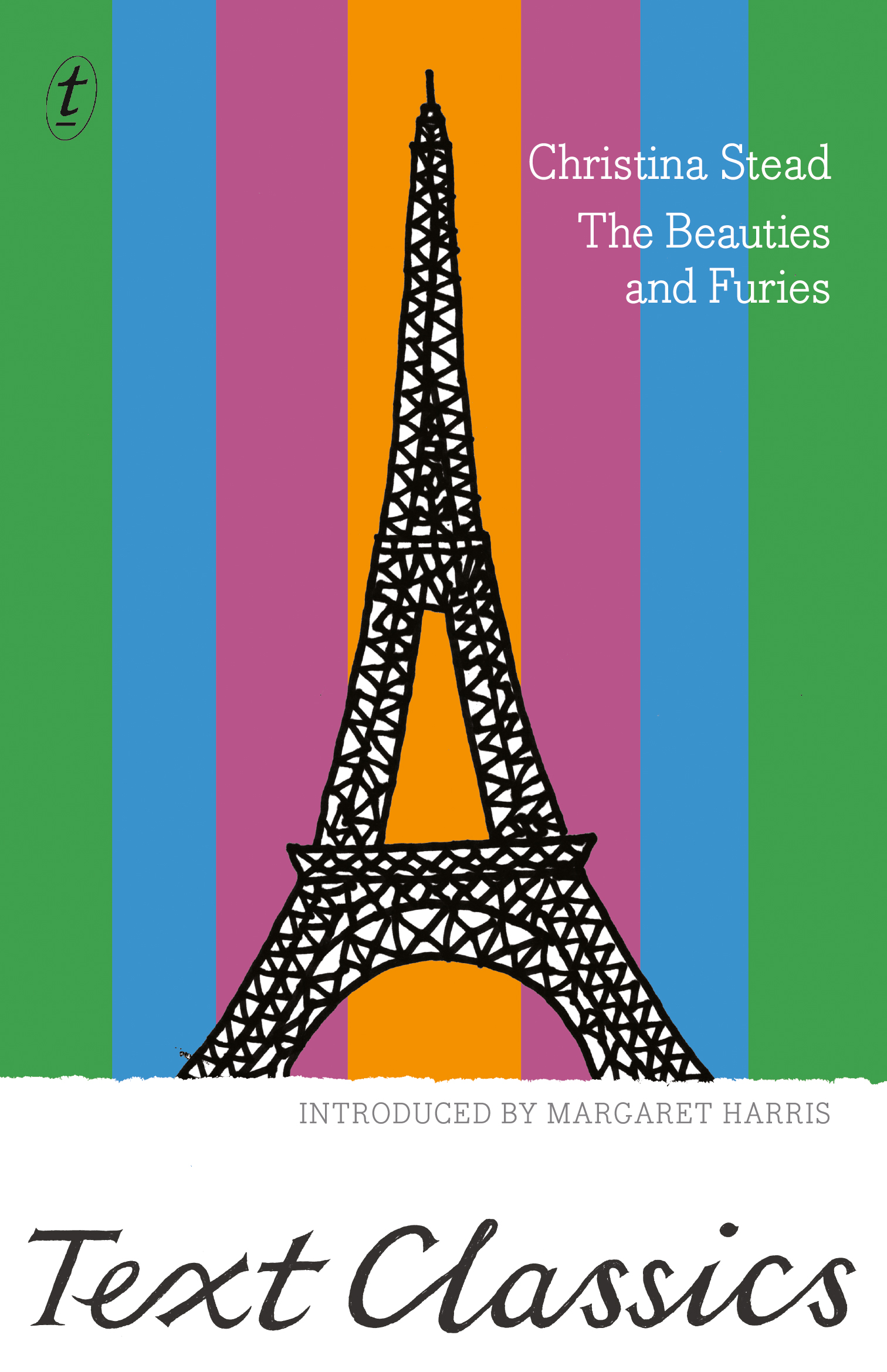
Another confession - I haven't read any of Christina Stead's novels (although Hazel Rowley's biography is wonderful and highly recommended). I'm going to remedy that this year by reading her second novel, published in 1936, I promise this is the last book on the  list with the Eiffel Tower on the cover but it does promise a love triangle set against a backdrop of political upheaval.


June
2017 marks the 50th anniversary of the 1967 Referendum which gave Indigenous Australians the right to vote and the 25th anniversary of the Mabo Decision which destroyed the concept of terra nullius. There's a lot for me to learn about both events. To begin, I'm going to read Mabo's story.


July
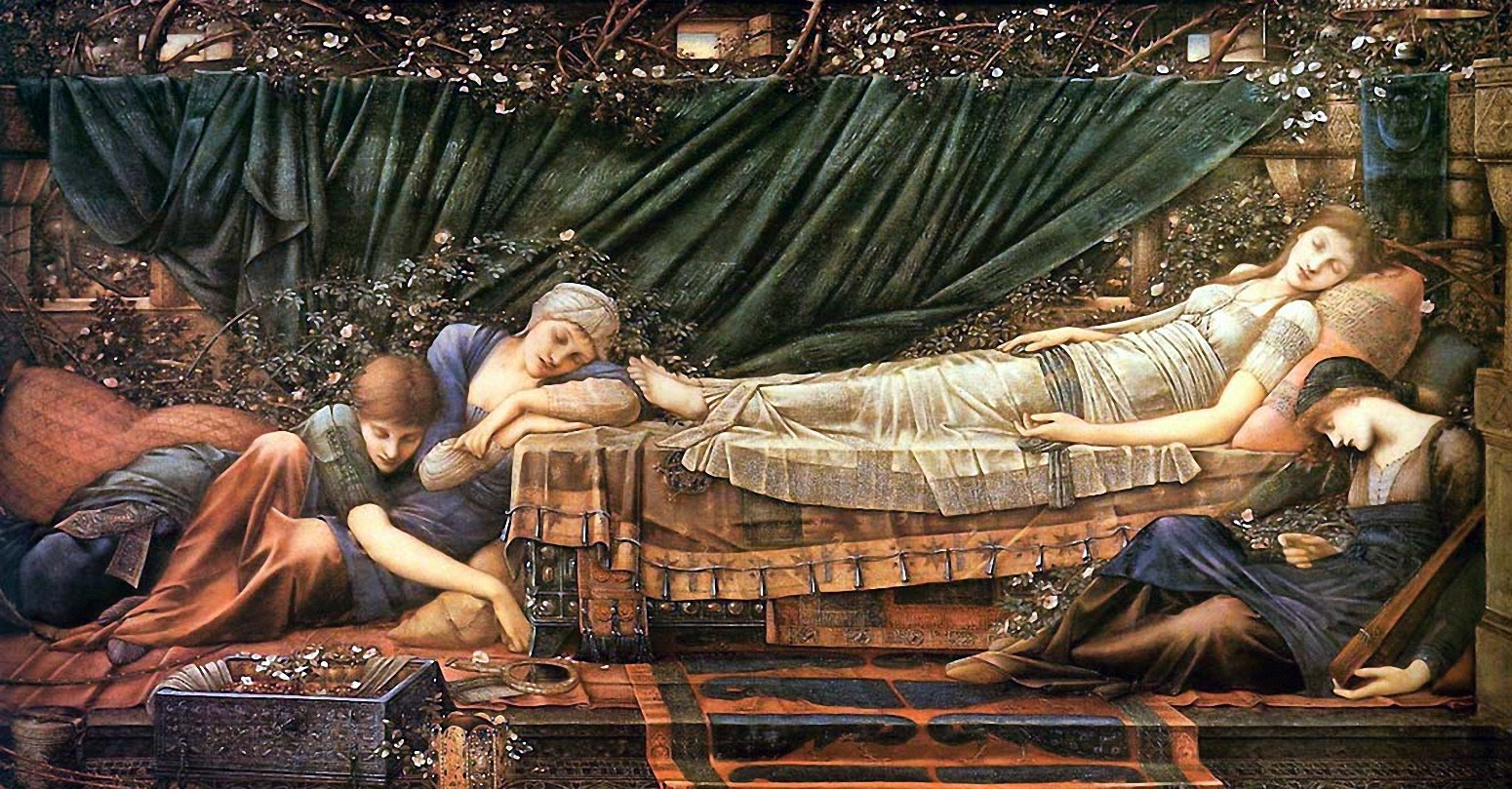
"The Rose Bower" from the
"Legend of Briar Rose"
by Sir Edward Burne-Jones,
via Wikipedia
I adore Kate Forsyth's reimaginings of fairy tales and the depths of winter seem to be the perfect time to curl up with her retelling of Sleeping Beauty through the lives of the Pre-Raphaelites. What a combination! If you are curious, she has written about writing Beauty in Thorns on her blog. Begin your pre-reading here.


August
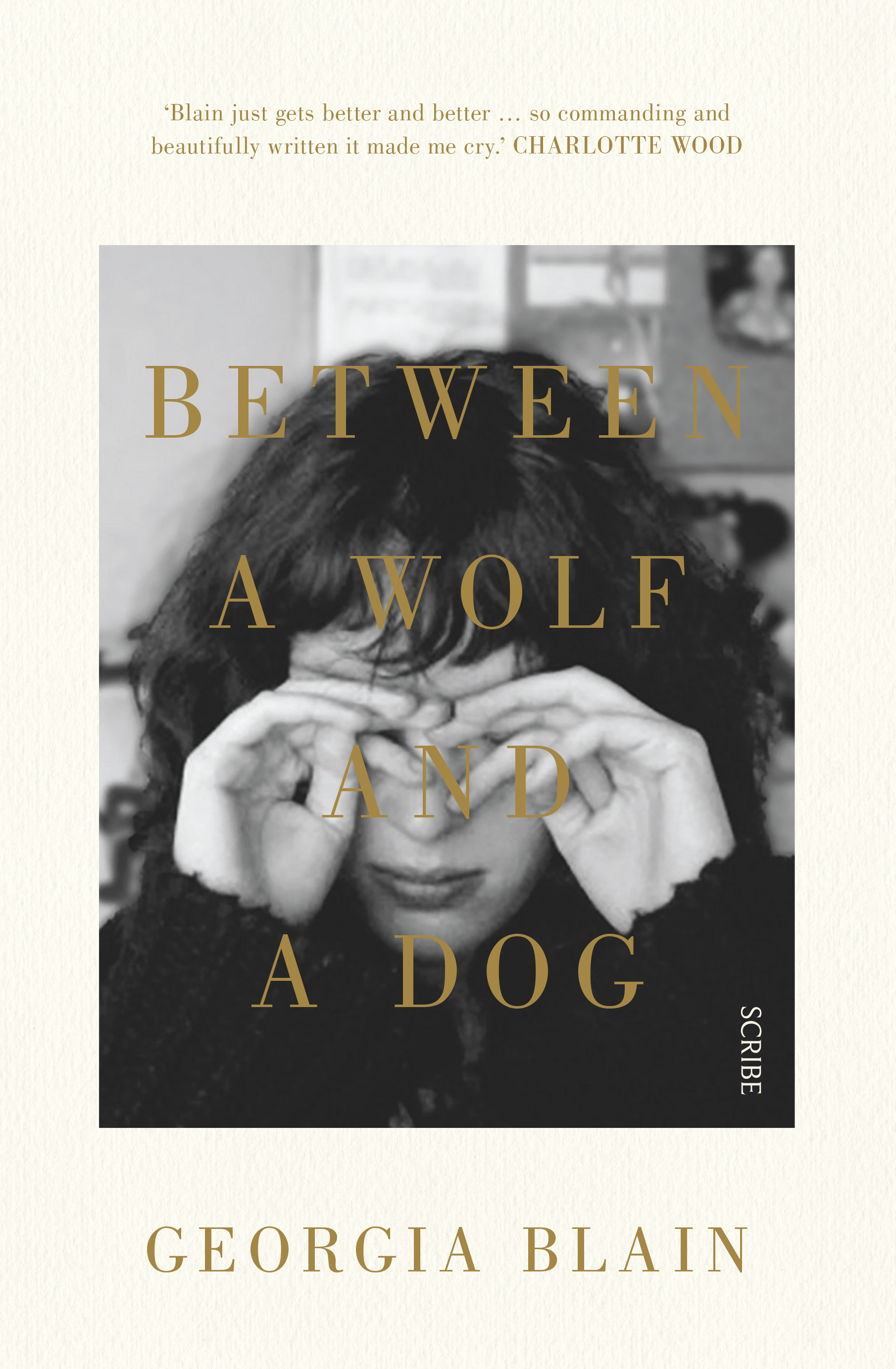
I feel a bit uncomfortable including Georgia Blain's novel on this list. Her death is so very recent and by all accounts the novel's terrain echoes aspects of the author's life. But the novel keeps appearing on 2016's 'best of' list and is probably demanding me to read it. So I'm going to read it before opening The Museum of Words, which the Sydney Morning Herald has gently described as her 'farewell book'.


September
Matthew Reilly has been writing best-selling novels for years, 20 years in fact. He's now published all over the world. I think it's time I explored what he's been up to. I could dive into the Scarecrow series or the Jack West novels. Instead, I'm going to start with The Great Zoo of China - with its female protagonist and a secret the Chinese have been keeping for over 40 years.


October
This list is a bit nostalgic and, having included Morris West, I thought I'd also include Nevil Shute, another of Australia's early international successes. A Town Like Alice was going to be my choice, until I discovered that On the Beach will be celebrating 60 years since publication in 1957. I've also never read Shute's post-apocolyptic tale, which was made into a movie starring Gregory Peck, Ava Gardner and (hard to believe) Fred Astaire as an Australian scientist.


November
Rediscover Joan Lindsay's Australian classic as it celebrates 50 years of publication.That's right, 50 years! I know there's a film and a soon-to-be-released tv series, but let's all go back to the source this year and read the book.


December
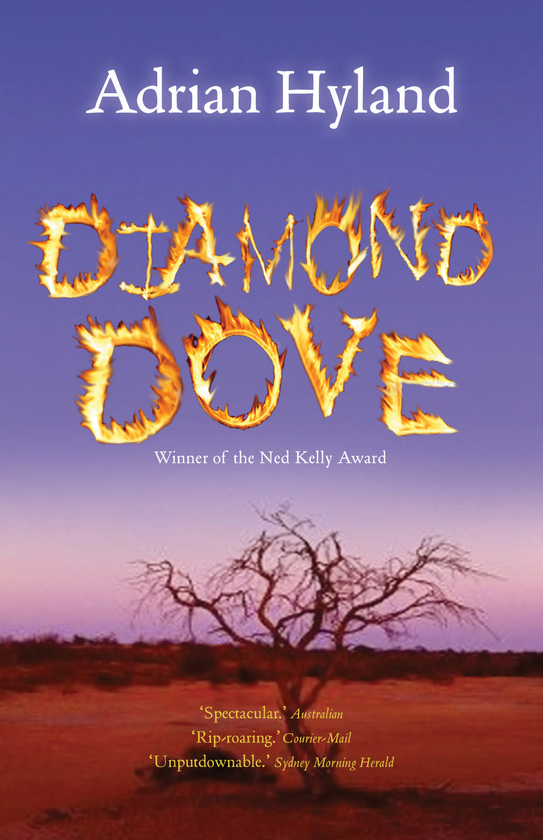
Choosing the final book for the year is tricky. I've gone with a crime novel, Adrian Hyland's Diamond Dove. Another female protagonist, it's a murder mystery set in Central Australia. And Hyland's publisher, Text, promise it's 'the wittiest and most gripping Australian crime novel you'll read this year'. 

Monday, October 17, 2016

Revisiting Little Women

Little Women, by Louisa M. Alcott
Angus & Robertson Ltd, Sydney, 1934
Little Women by Louisa M. Alcott was the book of my early childhood. I can't remember a time when it was not part of my life. Before I started school, my older sister had read the story to me and I'm sure we all watched the MGM movie starring June Allyson as Jo and Elizabeth Taylor as Amy on many a Sunday afternoon.

Part of my fascination was no doubt due to being one of four sisters (like Louisa Alcott herself) - and having a brother coincidentally named Laurie. In my imagining, I was Amy. Jo was too boyish, Beth far too sickly and good, and Meg was boring. Who wouldn't want to be Amy with her golden curls and pretty nose that she helped to shape with the use of a peg? Looking back now there was another similarity too, one that I doubt I was conscious of. A couple of months before my 4th birthday, my father died suddenly. Like the March girls, I was growing up in a fatherless household.

The inscription by Ina Reynolds
But Little Women goes back further in my family story. In 1934, my mother was a pretty child with long ringlets created by curling her hair around rags each night. And, despite being a minister's daughter, she was desperate to go on the stage. She begged and begged her parents to allow her to take lessons and, although the country was in the grip of a depression and her father's income as a Church of Christ minister was meagre, somehow they found the money to allow her to follow her dream. So each week, little Joy walked up Frederick Street, Bexley to the top of the hill. She carried two shillings in her hand, payment for her elocution teacher, Ina Reynolds. When Mum was not quite 10-years-old, she was given a copy of Little Women by her elocution teacher. The gift, presented on 19 April 1934, was inscribed 'with many thanks for the help of both mother and yourself in Concert work ...'.

I'm the custodian of this family treasure. Published in early 1934 by Angus and Robertson, the blue cloth-covered edition features stills from the 1933 RKO Radio Pictures movie starring Katherine Hepburn as Jo and Joan Bennett as Amy. How I coveted this book! What a treat it was to be allowed to gently open it and look at the photographs.

Over the past week or so, I've done more than look at the photographs. It must be close to 40 years since I read the story of Meg, Jo, Beth and Amy - although it is so embedded in my memory that I can still score 89% on the New York Public Library quiz, Little Women: Which March Sister Said It?

And here's the thing - for the first few chapters, I regretted ever going back to it. Those girls, at the start of book anyway, are such whiners: we're so poor; it's not fair; why did father have to lose all his money?

'Christmas won't be Christmas without any presents.'

They drove me crazy. No wonder they were given copies of John Bunyan's Pilgrim's Progress to inspire them to be better! I nearly stop reading to avoid having damage done to my childhood memory. But it is Marmee, Mrs March who turns the book around for me. Marmee, who was completely forgettable in all my earlier readings. She was barely a presence and, when she was, she was mostly offering a lesson in how to behave. But listen to her speaking to Jo:
You think your temper is the worst in the world; but mine used to be just like it ... I've been trying to cure it for forty years, and have only succeeded in controlling it. I am angry nearly every day of my life, Jo; but I have learned not to show it; and I still hope to learn not to feel it, though it may take me another forty years to do so.
Katharine Hepburn as Jo and
Joan Bennett as Amy - a still from the
RKO Radio Pictures movie
Marmee angry? Nearly every day of her life? Suddenly, I am aware of all the anger that sits beneath the surface of this seemingly gentle book for girls. Time and time again, Marmee leaves the room with her lips tightly compressed. It is wild fury that leads Amy to burn Jo's manuscript, and it is Jo's anger that almost leads to Amy drowning. Aunt March is cranky with the world - although perhaps she has a right to be, having buried a daughter and a husband. Old Mr Laurence's anger with his dead son, who ran away to play music in Italy, leads him to be tough with young Laurie. And what of Marmee? Wouldn't you be angry too if your husband's poor business decisions meant you were flung with four daughters into the world of the genteel poor and then he ran off to minister to the soldiers fighting in the Civil War?

In 1868, when the book was first published, Marmee is angry and a feminist, reflecting the views of the author herself. Although she wants to see her daughters 'well and wisely married', she also advises them:
better be happy old maids than unhappy wives, or unmaidenly girls, running about to find husbands.
In a world where marriage seems to be the only option, Little Women offers it's readers alternatives. While Meg begins to yearn for marriage and her own home, Jo and Amy are planning on making their own way in the world, earning their fortune through writing and art. And the family newspaper, The Pickwick Chronicles, includes an advertisement for 'Miss Oranthy Bluggage, the accomplished Strong-Minded Lecturer', who is delivering a lecture on 'WOMAN AND HER POSITION'.

It's not until the sequel, Good Wives, published in 1869, that we see how Meg, Jo, Beth and Amy's lives play out. Somewhere I have my own, large-format illustrated copy. And yes, I'm going to read it. Not to see if Professor Bhaer is as lovely as I remember (although I hope he still is) but to discover whether Marmee manages her anger and continues to advise her little women to imagine alternative lives.

All quotes and images are from Little Women by Louisa M. Alcott, published by Angus & Robertson, Sydney, 1934


Thursday, September 29, 2016

Hal Porter: A writer I haven't read


The Tilted Cross by Hal Porter
Faber & Faber, London, 1961
Recently, I was given a copy of Hal Porter's Tasmanian novel, The Tilted Cross. Published in London in 1961 by Faber and Faber, the novel is set in Van Diemen's Land and is loosely based on the life of Thomas Griffiths Waineright, an artist, author and journalist, possibly a serial killer and 'multiple poisoner'. Surprisingly, given this colourful story, he was transported for forgery.

It wasn't Waineright who intrigued me, however (the Australian Dictionary of Biography provides a balanced overview of his life if you'd like to know more). It was the novel's author - Hal Porter.

Porter's memoir, The Watcher on the Cast-Iron Balcony, was published in 1963. One of the first Australian memoirs, it is widely regarded as a classic and today it's the book for which he is best remembered. Now out of print and not a novel, it still managed to find its way onto Booktopia's 2010 list of 'The 50 Must Read Australian Novels'.

As an adult, Porter lived a peripatetic life. The ADB entry reveals he moved from Bairnsdale to Melbourne, Adelaide, Hobart, Sydney, taking up short-lived teaching positions, tutoring, producing plays, running a hotel. In 1949 he joined the Army Education Unit and was posted to Japan twice. London beckoned in the early 1960s but he returned to Australia, spending the remainder of his life alternating between Melbourne and rural Victoria. Homosexual, his biographer Mary Lord revealed in 1993 he was also a paedophile. Was all this movement driven by the need to keep ahead of the law, of unhappy parents and school principals?

The one constant in his life seems to have been his writing. In an oral history interview recorded for the National Library of Australia in March 1964, Porter describes himself as a 'born writer', although one afflicted with a terrible disease.

Porter published Short Stories in 1942 and, according to the blurb on The Tilted Cross, 'won all the major short-story competitions in Australia'. A meeting with Angus and Robertson's editor Beatrice Davis in Sydney lead to the publication of poetry, novels and a trilogy of memoirs. Apparently a bit of a snob, he must have been over the moon to have been published in London by Faber and Faber, joining the likes of TS Eliot, Beckett, Harold Pinter and Ted Hughes.

The Tilted Cross received mixed reviews. In The Canberra Times review published on 9 December 1961, 'FX' wrote:
He spins his words like a thick spider's web and in the depths of the web he set an evil collection of characters - the impotent knight, his adulterous wife, the nymphomaniacal spastic, sadists, drunkards, homosexuals ... The book was written under a Commonwealth Literary Fund Scholarship. In spite of Mr Porter's previous achievements and record, I feel the money might have been better spent.
The full review is available via Trove.

Porter recognised that his writing wasn't liked by everyone, that some reviewers thought he was verbose, baroque and overblown. The opening paragraph of The Tilted Cross provides an example of why they might have thought that:
Van Dieman's Land, an ugly trinket suspended at the world's discredited rump, was freezing. From horizon to horizon stretched a tarpaulin of congealed vapour so tense that it had now and then split, and had rattled down a vicious litter of sleet like minced glass, that year, that winter, that day.
In his oral history interview, Porter claimed his large vocabulary was due to a childhood addiction to books and dictionaries.

Porter died in September 1984. A brief obituary in The Age noted that he once said that 'posterity would see him as a passable novelist, a fair playwright but a pretty good short story writer'. He was 73.
This post was written as part of the 2016 Sydney Story Factory Pen to Paper ChallengeI'm inspired by the work of Sydney Story Factory. I'd like to help them grow so that, one day, Martian Embassies will be all over this country. So during September I'm putting pen to paper - and hopefully rebooting my blog. If you enjoyed this post, please give whatever you can. Let's help the Sydney Story Factory grow.

Wednesday, December 17, 2014

Bookish Gifts for the Difficult to Buy For

I love a good 'best of' list and we've reached that time of year when it seems everyone (whoever she is) is sharing her favourites for 2014. I've been trying but I can't narrow it down to a manageable number - five becomes six becomes sixteen and 'best' becomes a nonsense.

So instead of a neverending story, here's a list of books you might buy for the difficult to buy for, drawn from my reading this year. It's not too late to pop into your local bookshop.


The world traveller you wish would come home
We all have one – the family member who makes their way somewhere else in the world and you wish you could tempt them home. Send them Nigel Featherstone’s novella, The Beach Volcano. It will remind your traveller of hot coastal nights, wintery Tasmanian days, and the powerful ties of family that never ever let go. It’s a slim volume, which means it will be cheaper to post than the latest volume of Thomas Keneally’s Australians series.

The family historian
 I will love Lloyd Jones forever for writing Mr Pip, a gutwrenching ode to the power of literature in the most unlikely place but his recent memoir, A History of Silence. A story of Christchurch as it struggles to heal after the earthquakes, it is also the story of writing across the silences in a family’s history to reveal the heartbreak at its core. It’s sad but exquisite – and anyone interested in family history will love sharing the research process with Lloyd Jones.

The new arrival
It's baby's first Christmas and baby already has everything: stuffed toys, rattles he can't hold, more clothes than anyone could possibly wear. The answer? Australia's children's classic, Where is the Green Sheep? by Mem Fox and Judy Horacek. It only has just over 100 words but it will last for years. It will be one of the first books read to baby, read with baby and read by baby. And one day, it will be the first book baby will read to another new baby.

The 'creative'
I struggle with 'creative' being used as a noun but I'm ignoring that because 'entrepreneur' or 'thought leader' seemed even worse. This is the person in your life who wants to make a living out of their passion, and who may or may not work in the arts or hospitality or museums or online or in design (fashion, graphic) or who writes or draws or makes music or theatre around the edges of their day job. Encourage them to follow the dream and have an inspired, glossy 2015 with a subscription to Renegade Collective.

The struggling reader
You know that if she could just make it to the end of the book, she would fall in love with reading for the rest of her life. But books have so many words, she's terrified. Give her The 13 Storey Treehouse by Andy Griffiths and Terry Denton, a book (and sequels) where words and pictures combine to reveal the powerful effects of imagination on the lives to Andy and Terry, who don't have very long to finish writing and drawing their next book.

The sister or bff
Anita Heiss' Tiddas is my pick in this category this year - and I've already gifted it to one of my sisters. It offers best friends, book talk, secrets, messy lives and one of the most engaging depictions of Brisbane I've ever read. Made me want to hop on the plane with Tiddas as my guidebook. Perfect for book clubs too, it challenges how Indigenous Australians are depicted in much of our fiction.

The political junkie
You don't agree with their politics. You don't know what political memoirs they have recently read. And sometimes they take their politics so damn seriously. Lighten them up with Behind the Lines; The Best Political Cartoons of 2014, published by the National Museum of Australia.

The lover of tales
Kate Forsyth writes across genres but until this year I hadn’t read any of her work. Then I read Bitter Greens, her reimagining of Rapunzel, and followed it quickly with The Wild Girl, a novel based on the story of Dortchen Wild who lived next door to the Brothers Grimm and was the teller of many of the tales they made famous. Set during the Napoleonic Wars, its romantic and passionate and heartbreaking – and it puts a wonderful woman back into the picture.

The Rebus fan
He says he loves crime but only ever talks about Rebus. Introduce him to Cormoran Strike, a wounded war veteran and his sidekick Robin (couldn't help myself). Strke is the creation of JK Rowling's alter ego, Robert Galbraith, and in his first outing, The Cuckoo's Calling, I fell hard. He's a tortured soul (not unlike Rebus), the streets of London leap off the page, the crime is intriguing, and Robin holds Strike and the book together. The second book in the series, The Silkworm, is on my summer reading list.


The dreamer
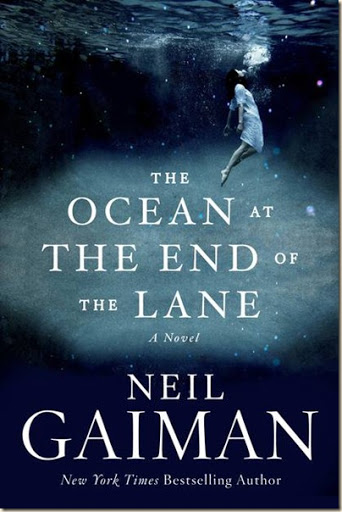
Neil Gaiman’s The Ocean at the End of the Lane is a dream of a book for the dreamer in all of us. A contemporary fairytale, it’s a story about a young reader for readers everywhere. As the narrator says: ''I liked myths. They weren't adults' stories and they weren't children's stories. They were better than that. They just were.'' Buy a copy for your dreamer and one for yourself as well.